































Geoff’s Narration
The Gist
Underestimating Long COVID?
The results from the RECOVER’s long-COVID Neuro clinical trial is in – and the news is not good. Then again, it wasn’t expected to be good. RECOVER’s first round of clinical trials hit the long-COVID community with a collective thud.
RECOVER hoped that finding new ways to exercise the brain would help. They didn’t.
RECOVER apparently believed that cognitive problems in long COVID were something that patients could, at least in part, learn to overcome. They had some reason to think these efforts could help. Similar interventions have been shown to work in diseases such as multiple sclerosis and mild traumatic brain injury.
They created a nice, hefty effort: 378 patients over 22 sites participated. The study assessed three treatments:

- BrainHQ (Posit Science)—an online program that has been reported to improve cognition in persons with mild cognitive impairment due to neurodegenerative disease5 and multiple sclerosis6;
- PASC-Cognitive Recovery (PASC-CoRE)—a cognitive rehabilitation intervention which has been helpful in mild traumatic brain injury);
- Transcranial direct current stimulation (tDCS), a noninvasive, remotely administered approach to brain stimulation intended to improve cognitive function.
They were compared with a control group that completed online puzzles and games.
THE GIST
Donation Drive Update

We’re keeping a close eye on the massive RECOVER long COVID project.
Thank you to everyone who has contributed to Health Rising, bringing it to nearly 40% of its goal!
Health Rising has been watching the RECOVER Initiative closely. We’ve probably published more about it than other website. (There are one point six six billion ($1.66 billion) reasons why we’re doing that.) Admittedly, the news has not been good. In fact, it’s been downright disappointing.
So why continue to cover it? Because RECOVER presents an immense possibility not only for long COVID but for everyone with a post-infectious disease, and needs to be held accountable. RECOVER’s story has been pretty bleak thus far, but it’s not over. We’ll continue to keep our eye on it. If that supports you, please support us.
They certainly didn’t stint on cognitive tests. The primary endpoint was something called the “Everyday Cognition Scale 2 (ECog2)”, and PROMIS assessments were used to track cognitive functioning, general health status, fatigue symptoms, depression, anxiety, and sleep-related impairments. Plus, neuropsychological testing (Auditory Verbal Learning Test, the Symbol Digit Modalities Test, the Digit Vigilance Test, the National Institutes of Health Toolbox Flanker Test, lexical and semantic fluency, and the Cogstate Brief Battery) was done. From what I could tell, the tests matched up pretty well with tests that have proven effective in ME/CFS.
Results
Patient participation couldn’t have been better. Better than 90% of the participants completed greater than 80% of the interventions.
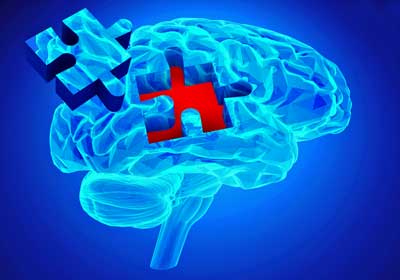
Cognitive retraining is not the answer to the brain fog found in long COVID.
Unfortunately, nothing worked…Despite working on them for 10 weeks, not one of the over a dozen tests showed significant improvement. While no improvement on the tests was seen, 74% of the participants reported they believed that participating in the cognitive training did “help” their cognitive functioning (222 [74%]) or improved their overall functioning (74 [58%]).
The subjective benefit is not nothing, and it suggests that some people might want to give these programs a try. The failure to improve cognitive functioning, however, means this avenue is probably closed. Note that with RECOVER, even a failure provides a benefit. RECOVER’s clinical trials are likely large enough and well-designed enough to either open or close the door to future trials.
The authors noted that other attempts to improve cognition have failed. This trial failure suggests that exercising the brain in new ways is not going to markedly improve cognition – and that’s helpful. The worst outcome might have been some sort of middling result in which some but not much improvement was made. Any positive result could have shut down other avenues of inquiry.
*Update! – the Beacon University REACT study which used computer games to improve cognition reportedly had positive results. It should be published soon.
Tough Disease!
The results also demonstrate what a brutally tough disease long COVID is. The expectations were never that high: these treatments generally produce small to moderate effects, but RECOVER surely expected to achieve that.

Long COVID is a tough disease. With four failed clinical trials, RECOVER is learning just how tough it is.
One would have thought that a program (Brain HQ) that improved cognition in multiple sclerosis and pre-Alzheimer’s disease would help in long COVID, but no. (The authors were so jazzed by the results that they asserted the program “can be readily applied to other neurological conditions associated with cognitive dysfunction”.) Similarly, it was thought a cognitive program (PASC-Cognitive Recovery) that helped with mild traumatic brain injury patients would help with long COVID, but no.
(There’s nothing “mild” about mild traumatic brain injury, by the way. It causes symptoms like confusion and difficulty concentrating, memory problems and short-term memory loss, headaches, dizziness/loss of balance, and sensitivity to noise or light.)
If tDCS is able to increase processing speed – a key cognitive problem in ME/CFS – in multiple sclerosis, it should certainly be able to do so in long COVID – but, again, no. The takeaway – long COVID is a surprisingly challenging disease, and researchers will have to dig deeper to understand how to help with cognition.
A Missing Piece and Moving Forward
Note that this study did not include an exertion stressor, which would have revealed additional cognitive issues. Indeed, studies indicate that exertion plays a key role in cognitive functioning in these diseases, and that provides a nice clue.
Dane Cook, in his superb study, “Neural consequences of post-exertion malaise in Myalgic Encephalomyelitis/Chronic Fatigue Syndrome“, found that exercise exacerbated symptoms, impaired cognitive performance, and affected brain functioning. Another study found that after being tilted – which reduces blood flows to the brain – people with ME/CFS did worse on cognitive tests.
The Brain Fog in Chronic Fatigue Syndrome (ME/CFS) Plus Even Mini Tilt Table Tests Wrack the Severely Ill
As the brain fades under stress, more challenging and longer cognitive tests tend to illuminate the cognitive problems in ME/CFS more. Cook, for instance, found that ME/CFS patients did worst on the more challenging PASAT test. As the test proceeded, and as their brains scrambled to keep up, more and more brain regions (parietal cortices, the supramarginal gyrus, cingulate cortex, and the frontal temporal cortices) needed to become activated – an inherently inefficient and energy-consuming endeavor.
A Japanese study found that sympathetic nervous system activity increased during a cognitive test, but once the test ended, the parasympathetic nervous system was unable to restore the brain and body to a resting state. The inability to do that was highly correlated with fatigue. Once again, we see exertion discombobulating things. Everything seems to point to a lack of resources/energy.
Fatigue – the Japanese Way: A Chronic Fatigue Syndrome Perspective
Time to dig deeper into the brain!
All this suggests that the long-COVID and ME/CFS brain doesn’t have the resources to carry out normal tasks – something no amount of cognitive training is going to alter substantially. Long-COVID patients inherently understood that – hence the, at best, muted reception they gave these efforts. It’s no surprise they failed.
The fact that cognitive retraining/brain stimulation programs that have helped in other diseases failed to do so in long COVID is, if anything, a wake-up call for an initiative that needs one.
With its failed Paxlovid and Neuro trials, the RECOVER Initiative and the long COVID field are hopefully done with ‘the easy stuff,’ which Michael Peluso believed the field had to do if only to get past it. The good news is that RECOVER has numerous options (blood flows into and through the brain, energy production, and neuroinflammation) to explore.
Now that the preliminaries are done, let’s hope that’s the next step.
Donation Drive Update
We’re keeping a close eye on the massive RECOVER long COVID project.
Thank you to everyone who has contributed to Health Rising, bringing it to nearly 40% of its goal!
Health Rising has been watching the RECOVER Initiative closely. We’ve probably published more about it than other website. (There are one point six six billion ($1.66 billion) reasons why we’re doing that.) Admittedly, the news has not been good. In fact, it’s been downright disappointing.
So why continue to cover it? Because RECOVER presents an immense possibility not only for long COVID but for everyone with a post-infectious disease, and needs to be held accountable. RECOVER’s story has been pretty bleak thus far, but it’s not over. We’ll continue to keep our eye on it. If that supports you, please support us.