



































Geoff’s Narration
The GIST
Muscles on a Chip
Whoa, another muscle study. We recently reported on a proteomic study suggesting that muscle repair problems contribute to post-exertional malaise in ME/CFS. Now, we have a direct muscle test – and even better – we get to see whether something in the blood is whacking the muscles.
Exercise is Not Producing Muscle Damage in ME/CFS…It’s All About Muscle Repair
The things medical research can do… The “Metabolic adaptation and fragility in healthy 3D in vitro skeletal muscle tissues exposed to chronic fatigue syndrome and Long COVID-19 sera” did one really novel thing in ME/CFS and long COVID (“build a muscle on a chip)” and thing that’s getting almost commonplace – exposing something to serum from people with ME/CFS and/or long COVID.

The Spanish researchers built human muscle tissue and then exposed it to serum from patients with ME/CFS and long COVID.
The “muscle on a chip” process (or, if you prefer, the “3D bioengineered in vitro skeletal micro-physiological system”) consists of building, in the lab, miniaturized skeletal muscle tissues that are designed to behave like muscles.
In this case, a Spanish research group led by Sheeza Mughal at the University of Barcelona took healthy muscle cells, placed them in a collagen/fibrin matrix, and then activated them with electrical impulses.

Next, they exposed them to serum from ME/CFS for 48 hours and then assessed how strong the muscles were, what kinds of genes had become activated, and how muscle structure had changed.
Why go to all this trouble? In part because the process is so “clean”. Instead of exposing rodents – which are different from humans – to patient serum, this process exposes human tissues to patient serum. The researchers can then stress the muscles in the lab in various ways. Because they have standardized healthy immune tissue, they don’t have to worry about possible cofounders like activity levels, comorbid diseases, etc.
The downside is that a laboratory can never truly replicate what’s occurring in the body. The upside is a clean approach that allows researchers to probe, in many ways, what may be happening in these diseases.
The GIST
- The things medical research can do… The “Metabolic adaptation and fragility in healthy 3D in vitro skeletal muscle tissues exposed to chronic fatigue syndrome and Long COVID-19 sera” did one really novel thing in ME/CFS and long COVID (“build a muscle on a chip”) and a thing that’s getting almost commonplace – exposing something to serum from people with ME/CFS and/or long COVID.
The Spanish researchers built human muscles and then exposed them to serum from ME/CFS and long-COVID patients.
- In this study, a Spanish research group took healthy muscle cells and then exposed them to serum from ME/CFS and long-COVID patients and healthy controls for 48 hours.
- Then they tested them. First, they found that muscles exposed to ME/CFS and long-COVID serum produced less force, were weaker, and less resilient. Interestingly, the muscles exposed to the ME/CFS patients’ serum were the weakest of all.
- While the muscle strength test showed similar results (albeit with more muscle weakness when exposed to ME/CFS serum), the gene expression analysis found that different genes were activated or silenced in the two groups.
- The authors reported that the findings suggested that “fundamentally different anti-stress mechanisms” were at play in ME/CFS and long COVID (LC).
- The muscles exposed to the ME/CFS serum had turned on genes that remodeled the matrix surrounding the muscles, and turned down genes associated with mitochondrial activation. This was an intriguing finding, given a recent finding indicating that the matrix around the muscles may be impeding blood flows to the muscles.
- The muscles exposed to long-COVID serum, on the other hand, were trying to activate the mitochondria and produce more energy. It’s possible that these differences could reflect disease duration: the mitochondria in ME/CFS patients had burned themselves out while the mitochondria in long-COVID patients were still trying to generate power.
- In both diseases, though, the mitochondria in the muscles appeared to be under severe stress. The mitochondria in muscle tissues exposed to ME/CFS serum were “wired” to the gills; i.e., they were eating up oxygen at a high clip. The increased expression of an enzyme suggested one possible reason: too much calcium was accumulating in the muscle cells, causing fatigue, consistent with Wirth and Scheibenbogen’s hypothesis. (Blog coming up.)
- A ChatGPT analysis of the study methodology found that the study was well constructed and done, but brought up some concerns with a statistical problem called pseudoreplication, which can inflate results.
- An assessment of past “transfer” studies in which tissues or mice are exposed to ME/CFS or long-COVID plasma, serum or blood, found many enticing results. The small studies, the different assays, and methodologies used, though, make it hard for the field to move forward quickly. One large, multi-center, standardized study that can tell if “something in the blood” is, indeed impacting these diseases and what it is, would move this field forward dramatically.

By the end of the blog, the light bulb came on – one big study (just one!) – would dramatically propel this field forward.
Donation Drive Update!
Thanks to hundreds of supporters, the drive is booming – we are now over 60% of the way to our goal.
This was another long blog – much longer than intended, actually – but that’s what so often happens. There was the methodology to check out (thanks, ChatGPT!), then a look at what past studies found, and that led to an overview, and a conclusion – just one large, well-organized study would dramatically propel this oh-so-intriguing part of the ME/CFS field forward.
If you want an analysis that goes beyond the simple facts of a study and looks to the past and the future, you’re in the right place. Please support us!
HEALTH RISING IS NOT A 501 (c) 3 NON-PROFIT
Results
Feeble Muscles
These researchers exposed the muscle to serum from four ME/CFS patients, five long-COVID patients, and four healthy controls for 48 hours. Then they electronically stimulated the muscle. After being stimulated for too long, the muscles will either run out of energy or lose structural integrity. In either case, they will “relax” and no longer be able to contract effectively.

Muscles exposed to ME/CFS or long-COVID serum lost the ability to contract (produce energy) effectively.
The researchers used a “time in peak” measure to assess how long they could maintain peak performance. Both ME/CFS and long-COVID serum dramatically reduced the muscle’s ability to contract and generate force over time, to reach peak force, and to contract quickly (important determinants of strength).
The ME/CFS and long-COVID serum then caused the heretofore healthy muscles to become less resilient and weaker. Interestingly, the muscle tissues exposed to ME/CFS serum were the least resilient and weakest of all. The healthy control serum had no negative effects on the muscles.
That finding spurred the researchers to dig deeper. A transcriptomic analysis assessed the effect the ME/CFS and long-COVID serum had on the gene expression of the healthy muscles; i.e. which genes the serum had turned on or off.
While there was substantial overlap between the ME/CFS and long COVID-findings, researchers dug deeper to see if they could uncover “subtle underlying biological trends or tendencies” that differed between the tissues exposed to the ME/CFS or long-COVID serum.
Different Diseases = Different Processes at Work?
They found them. The authors proposed that while commonalities were found, “fundamentally different anti-stress mechanisms” were at play in ME/CFS and long COVID (LC).
Tissues exposed to ME/CFS serum showed activation of genes involved in muscle structure, including the extracellular matrix (ECM) that supports muscle function and contraction. The ECM protects the muscles, provides their “springiness”, provides a scaffold through which blood vessels go, and helps them get bigger and stronger. Mitochondrial genes, by contrast, were downregulated.
The authors proposed that the ME/CFS serum produced an “environment characterized by chronic stress, impaired metabolic activity, and ongoing or maladaptive tissue remodeling.”
Intriguingly, Slaghekke’s as-yet-unpublished findings from the 2025 Charité Conference suggested that the extracellular matrix in ME/CFS patients had had been profoundly affected. Her findings, which prompted her to say, “I’ve never seen collagen deposition like this before”, suggested that the ECM was impeding blood flows to the muscles. Rob Wust said he was “super-excited” by her findings.
Are Barriers to Blood Diffusion Causing ME/CFS and Long COVID? The 2025 Charité International Conference Pt I
These were similar findings to a German 2023 study which found that muscles of long-COVID patients had fewer capillaries and thicker capillary basement membranes, and linked them to inflammation.
The long-COVID sera in this study, though, activated genes that “enhanced mitochondrial fatty acid metabolism, electron transport, and protein synthesis”.
It appeared that tissues exposed to long-COVID serum continued to increase mitochondrial metabolism, whereas tissues exposed to ME/CFS serum did not.
Or…Different Stages of the Same Disease Process?
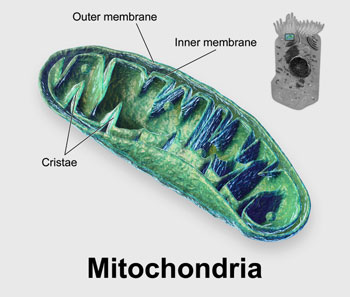
It appeared that the muscles exposed to the long-COVID serum were still trying to activate the mitochondria. (Image-
Mitochondria_Medical-gallery-of-Blausen-Medical-2014_Blausen_0644_Wikimedia_Commons.jpg)
While the authors did not suggest it, one wonders if the dichotomy could reflect the longer illness duration present in ME/CFS. At first, in long-COVID cells, try to compensate by turning mitochondria up (more fatty-acid metabolism, electron transport/OXPHOS), and protein synthesis (a “revving up” / repair attempt).
As they burn out, a metabolic downshift coincides with structural remodeling that produces more collagen deposition in the membranes, aka Aschmann and Slaghekke, which interferes with blood flows.
When it came to the mitochondrial respiratory chain complexes, i.e., the complexes that make the electron transport chain – both sera produced the same effect – a dysregulation in the last step in the ATP production process.
An upregulation in TCA cycle and glycolytic gene expression in muscles exposed to ME/CFS and LC-19 sera indicated the muscles were trying to increase energy production. Increased levels of a factor called lysine methyl transferase in ME/CFS and long COVID-exposed muscle tissues suggested that an attempt to stabilize the mitochondria had taken place.
A Core Problem? Calcium Dysregulation
Then came the calcium findings. The upregulation of an enzyme (ATP2AI) that pumps calcium ions into the membranes (sarcoplasmic reticulum), and downregulation of ATP2B4 which removes calcium from the cell, suggested that increased intracellular calcium levels – which have been known to produce fatigue – were present.
These high intracellular calcium levels appear to support Wirth and Scheibenbogen’s hypothesis that mitochondrial calcium dysregulation plays a core role in ME/CFS.
Hypothesis Predicts Major Failure Point in Chronic Fatigue Syndrome (ME/CFS)
Emergency Compensatory Response
The muscle tissues exposed to ME/CFS or LC sera showed clear signs of significant stress. Muscles try to bulk up (become “hypertrophic” and, in order to share resources, the mitochondria tend to fuse in an attempt to “catch up”. This can be a healthy response, but the upregulated TCA and glycolytic gene-expression data, along with myotube degradation over time, suggested that the muscles were struggling; i.e., they were in an emergency compensatory response.
Wired and Tired Muscle Mitochondria

Running on empty – again.
Then we returned to the wired and tired phenomenon, in which a factor is wired at rest but then tanks when put under stress. The Seahorse mitochondria tests indicated that even at baseline, the mitochondria in muscle tissues exposed to ME/CFS serum were “wired” to the gills; i.e., they were eating up oxygen at a high clip. (So much for being at “baseline”.) The long-COVID muscle mitochondria were better off.
A stress test suggested that the upregulation was all for naught as much of the ATP being produced was leaking out (ouch!). (Again, this problem was worse in the ME/CFS serum-exposed tissues).
Overall, the rapid deterioration of healthy muscle tissue exposed to ME/CFS/long-COVID serum indicated (once again) that, while deconditioning may be present in some people, it cannot be causing the muscle/energy problems in these diseases.
Caveats
I asked ChatGPT to assess the study’s effectiveness and validity. (I can’t even begin to assess this.) I would not have believed what a rabbit hole this sent us down.
ChatGPT felt that the random assignment, blinded analysis, multiple independent runs, multiple exposure durations, the way the serum was handled, all spoke to a robust study. The small sample size (ME/CFS=5; HC=4), which dropped to N=3 in some parts of this study, made it a “pilot study”.
An hour later, after I’d uploaded virtually the entire methods section and most of the images, ChatGPT was still flummoxed on a key point. It simply wanted to know “whether each dot in the graphs represented a donor mean” or whether they represented data points from each test run. This was a crucial distinction.
The researchers did many measurements per tissue but only had a few donors. The best practice in that case would be to turn the many measurements per tissue/donor into a mean result per donor and assess that. If instead they assessed those assessments separately, that could produce something called “pseudoreplication”.

ChatGPT worried about “pseudoreplication”.
In pseudoreplication, multiple dependent data points – all of which came from the same participant – are treated as if they are independent when they’re actually reflections of each other. Since statistical tests like ANOVA require independent samples, pseudoreplication seriously screws up the probability ratings.
Because (unless I never got the right data to ChatGPT) it was impossible to determine the data points origins, ChatGPT warned about the dangers of pseudoreplication.
In the end, though, it called the study a “well-executed proof-of-concept/pilot study” that was best treated as hypothesis-generating. The contractility data was the most persuasive, and the structure/metabolism/transcriptomics data (which came from a smaller sample size) was suggestive.
Noting that the findings overwhelmingly support prior research findings. Once again, we saw ME/CFS/long-COVID serum produce profound effects – this time on healthy human muscle tissues. Reduced muscle contraction over time in both diseases, but more in ME/CFS, fits perfectly with study findings of reduced energy production.
Indeed, some gene-expression findings suggest that patients with LC may simply represent an earlier, less severe form of ME/CFS.
The most intriguing results may have been the emphasis on extracellular modeling, which may have blunted blood flows to the muscles, aka the Slaghekke findings, and the increased calcium findings, which spoke to a core part of the Wirth/Scheibenbogen hypothesis.
One can only hope that these Spanish, or other, researchers get the funding they need to expand on these intriguing findings.
Not so Passive! The Passive Transfer Findings Mount up!
Studies that determine what effect transferring serum or IgG antibodies from ME/CFS or long-COVID patients into mice, muscle tissues, the mitochondria, etc., have produced a great deal of excitement – and for good reason. They suggest that something in the blood – which presumably can be identified – is causing or greatly contributing to these diseases.
The mostly positive results are encouraging…but we need more.
As I remember, it all started about ten years ago when both Ron Davis and Fluge/Mella reported that transferring serum/blood from ME/CFS patients into a lab culture produced dramatic effects. At that point, it seemed like an important answer was in more or less clear sight: something in the blood was causing or greatly contributing to ME/CFS. All we needed to do was determine what it was.
I also remember Ron Davis saying something to the effect that doing so “was not a trivial problem”, and, indeed, ten years later, we still don’t know what the mystery substance is. The idea that something in the blood is contributing to these diseases has, however, only gained traction over time.
Regarding ME/CFS and long COVID – the subjects of this study – this is what studies have found.
- 2016 – Fluge/Mella reported that exposing muscle cells to ME/CFS serum increased lactate production and mitochondrial activity.
- 2020 – ME/CFS serum fragmented mitochondria and produced an antiviral state in the lab.
- 2022 – Endothelial cells exposed to long-COVID serum exhibited reduced nitric oxide (NO) functioning.
- 2022 – Endothelial cells exposed to ME/CFS plasma showed reduced nitric oxide (NO) production.
- 2023 – Exposing endothelial cells to long-COVID serum produced inflammation.
- 2023 – ME/CFS serum produced increased reactive oxygen species production in human microglial cells.
- 2024 – Long-COVID plasma activated platelets.
- 2024 – Exposing the endothelial cells from human brains to serum from long-COVID patients induces inflammation.
- 2024 – Transferring long-COVID IgG antibodies into mice produced increased pain sensitivity, loss of balance/coordination, and a trend toward weakness, and small fiber neuropathy.
- 2025 – An attempt to replicate Fluge and Mella’s 2016 finding failed.
- 2025 – Exposing “muscles on a chip” to ME/CFS or long-COVID serum produced weakened muscles.
- 2025 (?) – Exosomes isolated from patients with ME/CFS stimulated the microglia to produce IL1B.
Sigh…A Familiar Pattern
It’s nice to see all these findings, but there is a but…We’ve seen this pattern of many small studies producing positive results before. The news is encouraging, but the studies are too small, and employ too many different methods and assays, etc., to produce major funding. The field continues to progress; researchers continue to conduct their research; contributions continue to be made; yet the findings rarely reach the point where they can directly benefit patients.

One large, rigorously done, multi-center study would save years of research and tell us what we need to know.
For any finding, for instance, to “take”, it needs to be replicated by 2–3 independent labs that use the same assays and blinded samples. I don’t know, but I wonder how many times, if ever, that’s ever been done in ME/CFS.
What we need is a serious effort to break the logjam: a multi-center, blinded, consortium-based serum/plasma “challenge” study that handles the samples in the same way, uses standardized assays, determines if a dose-response pattern is present, identifies a specific component that’s causing trouble, and then removes it to see if the same response occurs. Surely we have enough evidence to support a major study like that.
This study would test a variety of tissues (platelets, endothelial NO, BBB endothelial activation, cardiomyocytes, 3D muscle) against a range of agents (IgG, EVs/exosomes, complement, etc.). Once it was clear which component affected which tissue, researchers would attempt to identify the active agent; i.e., which antibodies, EVs, proteins, or small molecules were causing the problem. Then the suspect factor would be introduced and removed multiple times to assess the robustness of the finding.
If we did that, we would know if something in the blood is contributing to ME/CFS or long COVID, and if it was, we would have a treatment target, and the opportunity to directly affect patients.
- Coming Up – Wirth and Scheibenbogen believe they know why people with these diseases can get so ill
The light bulb came on – one big study (just one!) – would dramatically propel this field forward.
Donation Drive Update!
Thanks to hundreds of supporters, the drive is booming – we are now over 60% of the way to our goal.
So, this was another long blog – much longer than intended, actually – but that’s what so often happens. There was the methodology to check out (thanks, ChatGPT!), then a look at what past studies found, and that led to an overview, and a conclusion – just one large, well-organized study would dramatically propel this oh-so-intriguing part of the ME/CFS field forward.
If you want an analysis that goes beyond the simple facts of a study, and looks to the past and the future, you’re in the right place. Please support us!
HEALTH RISING IS NOT A 501 (c) 3 NON-PROFIT


